
The following article is a collaboration with the Philippine newspaper Pinoy Weekly
MANILA – The Philippine public transport system is at risk of a total shutdown as the impact of the US-Israel aggression on Iran hits millions of transport workers and the country’s energy sector. On the 24th of March, president Ferdinand Marcos Jr. declared a State of National Energy Emergency, prompting a “whole-of-government” approach on addressing the effects of the Middle East conflict on the Philippine economy. However, transport workers and commuters, the hardest hit by unregulated surges in oil prices, claimed that the declaration fails to provide significant long-term solutions. They criticize Marcos Jr. for relying on meager cash handouts instead of addressing their long-standing demands to remove fuel taxes and regulate the oil industry.
Domestic fuel prices have increased to over 81.6%, the highest in Asia, since the US and Israel launched attacks on Iran. Weekly hikes spiked diesel pump prices to over Php146 ($2.40) per liter in March from Php55 in February. Transport group Pagkakaisa ng mga Samahan ng Tsuper at Operators Nationwide (PISTON) estimates that jeepney drivers now spend over Php4,350 ($71) a day on diesel. With the lack of sustainable government support, public transport drivers are forced to operate at a loss. Many have already ceased operations due to high fuel costs.
National Emergency
In a March 25 speech, Marcos Jr. announced that the emergency declaration — issued through Executive Order 110 — enables the government “to act faster, to buy oil without the need of going through a long process, and to unify all agencies in one direction.” As for oil prices, he stated “We have no control over that. Oil will do what it will do. The markets will behave in the way that they behave.” The Philippine government is the first in the world to declare a national emergency from the oil shock, despite Marcos Jr.’s initial assurance, in the aftermath of the US attack on Iran, that “everything is normal.”
However, independent think tank Ibon Foundation Executive Director Sonny Africa predicts that the emergency declaration won’t do much on stopping oil and commodity price hikes because it presumes that oil companies’ declared prices are “reasonable.” Even before the Iran War, oil companies have already increased fuel prices for nine straight weeks since January 2026. The price hikes rose sharply in March, even as Marcos Jr. claimed that oil reserves in the country are ample until June 30.
The Department of Energy announced on Monday that it has extended the country’s supply by 6 days after securing 1.042 million barrels of diesel by April. Petron Corporation, the biggest oil company and sole refinery in the country, also procured 2.48 million barrels of sanctioned Russian oil.
“If there is ample supply, that was bought when prices are lower, why are prices increasing so rapidly?” asked Mody Floranda, PISTON National President.
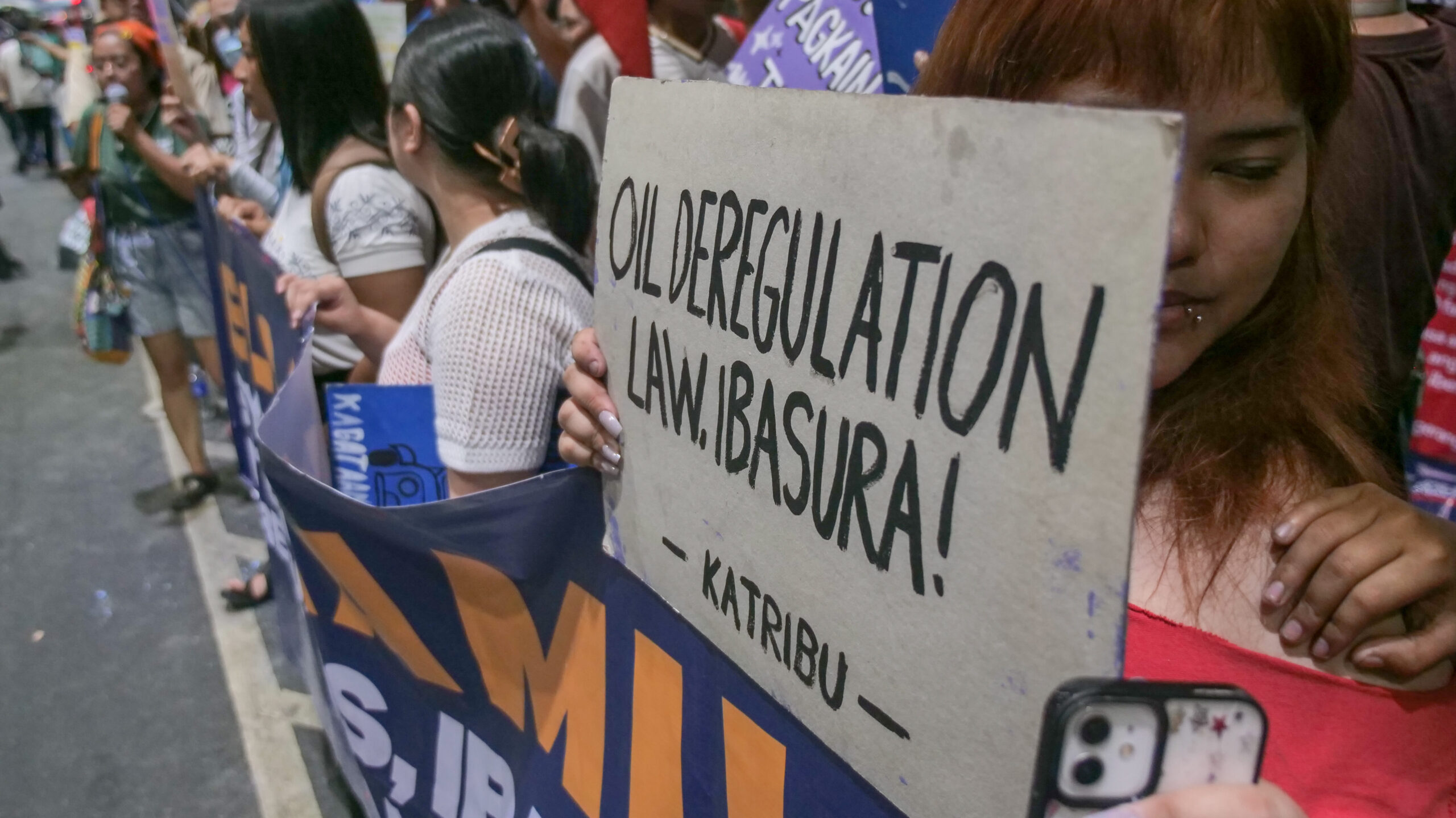
In 1998, the government surrendered its control over the country’s downstream oil industry to the monopoly of private corporations through the enactment of the Oil Deregulation Law. This removed the state’s power to control prices and limited its role as a mere announcer of the speculative market prices dictated by Petron, Shell and Caltex, the three biggest oil companies in the Philippines.
Loss of Livelihood
Cheap and widely accessible, the iconic jeepneys are the primary mode of public transportation in the Philippines. Over 250,000 drivers, covering 1,767 routes nationwide, depend on these repurposed World War II vehicles for a living. Tony Prado, a jeepney driver plying the Cubao to Divisoria route, used to earn at least Php1,000 on an eight-hour work day. Now, he barely takes home Php200 after running his route for 18 hours. A Filipino family of five needs at least Php1,300 a day to survive, according to Ibon Foundation’s study.
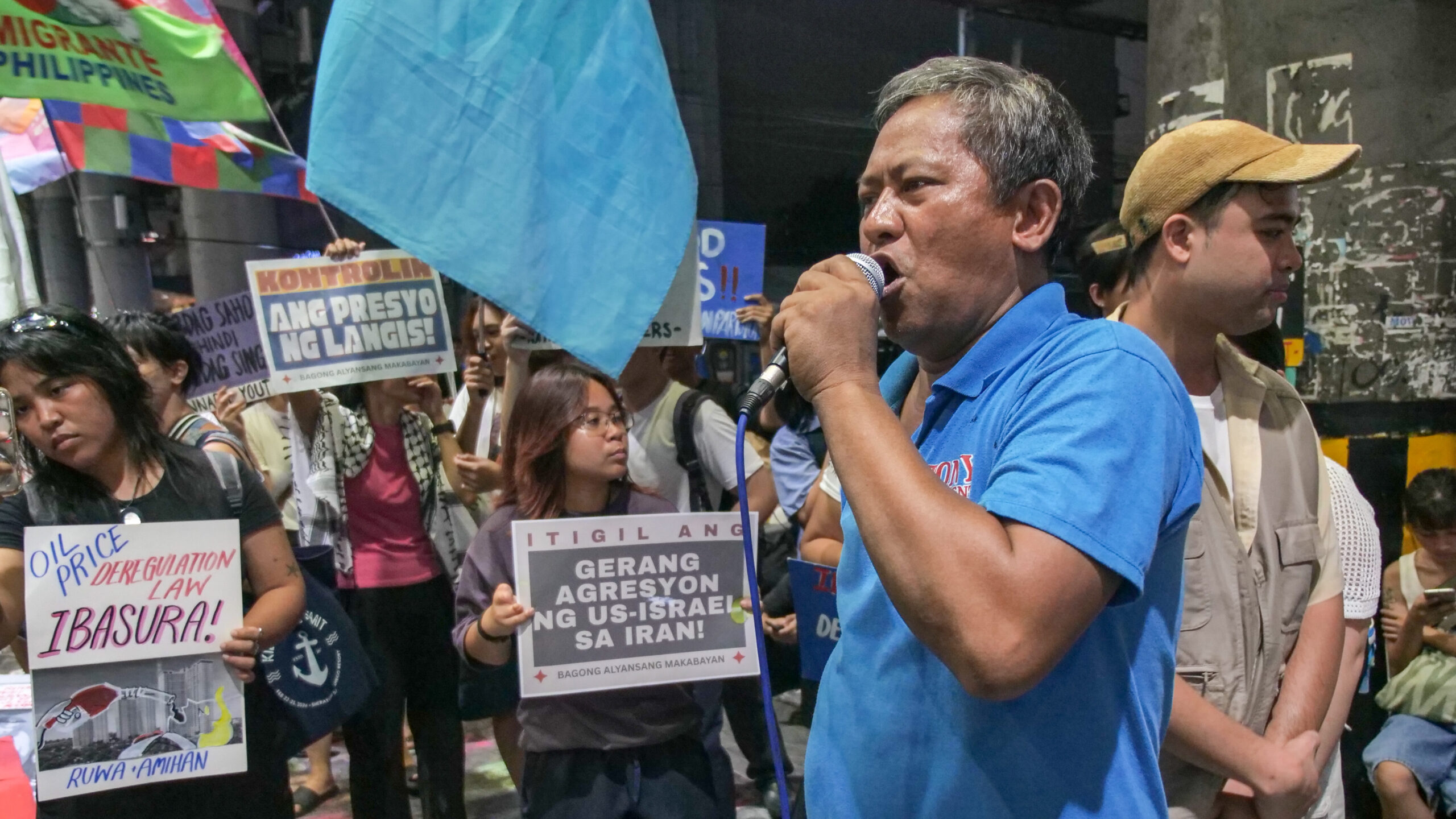
Prado already told his child, who had just finished first year college, that he might need to skip school this year and find work. “It is very painful for me, as a parent, that I can no longer afford to send my children to school,” he said. Jeepneys are the lifeline of the country’s public transportation system. Operated largely by low-income drivers and small-scale operators, they have filled the gap left by the absence of a reliable mass transit system.
More on jeepneys:
Jeepneys originate from the American colonial period share taxis and are the most common means of public transportation in the Philipines. Throughout the country more than 240.000 of them are in use, 55.000+ in the Manila region alone, amassing roughly 40 million person trips/day and ca. 40% of all motorized person trips. The modern jeepney is templated after the military jeeps the US army left after WWII.
Commuter Woes
The jeepney shortage is already felt in the streets of Manila. Thousands of stranded commuters along what used to be busy highways have become a common sight during rush hour. “As oil prices increase, the number of plying jeepneys decreases. We commuters fear that one day, 100% of public utility vehicles will stop plying the streets,” said Reign Desaca of the PARA Commuter Network. Marcos Jr. revoked the government’s previously approved one peso fare increase for passenger jeepneys, citing its negative impacts on commuters’ transportation costs.
The government meanwhile implemented a 50% fare discount for the Light Rail Transit Line 2 (LRT-2) and the Metro Rail Transit Line 3 (MRT-3). This only covers two out of the more than 900 transport routes in Metro Manila alone. For Desaca, instead of pitting drivers against commuters, the government should act on providing immediate relief from the oil shock through wage hikes. He also warned that commuters’ woes could worsen because of the government’s lack of a long term solution to skyrocketing oil prices.
Burden for the poor, bail-out for big oil
The government’s social welfare department announced on Monday that it has rolled-out Php1.28 billion ($21 million) worth of cash assistance to 256,000 transport workers in Metro Manila since March 17. Labor groups called the government’s cash aids a “band-aid” solution that would only bail-out oil companies.
“The government is not giving aid to jeepney drivers and operators, but to big oil companies. It may pass through our drivers’ hands, but would be taxpayers’ money directly spent to buy diesel,” Jerome Adonis, chairperson of national labor center Kilusang Mayo Uno (KMU), argues. Furthermore, motorcycle taxi riders group Kapatiran sa Dalawang Gulong (Kagulong) states that transport workers do not need a “one-time-small-time” cash handout. They are calling for reforms to address the impact of the oil shock on their livelihood.
“If the government calls us to sacrifice, all should sacrifice. And the most capable of such sacrifices are those who earn billions, not us who live hand-to-mouth,” explains Kagulong Secretary General Don Pangan.
On March 25, Marcos Jr. signed a new law granting him emergency powers to cut or suspend oil excise taxes. However, even with a declared emergency, the President does not seem to be in a hurry to provide tax relief to Filipinos. Removing tax on oil products would incur an estimated Php136 billion loss ($2.24 billion) in government revenues. But Africa (think tank Ibon Foundation) argues that these can be easily recovered by imposing a one to three percent wealth tax on the country’s top 15 billionaires, which could generate over Php153.5 billion ($2.53 billion). Imposing the same taxes on the 3,000 richest Filipinos can even generate Php500 billion ($8.24 billion), which the think-tank head said can be used to “ensure that more Filipinos will be given more help for as long as they need.”
Instead, the Executive Order 110 enforces austerity and energy conservation measures. Energy Secretary Sharon Garin even called on Filipinos to think about “lifestyle changes” as oil prices continue to rise. “The EO’s message is clear: The Marcos Jr. administration wants the burden of adjusting to the oil shock to be borne by poor and ordinary Filipinos, while the profits of corporations and the wealth of billionaires are protected,” asserted Africa.
Shutdown
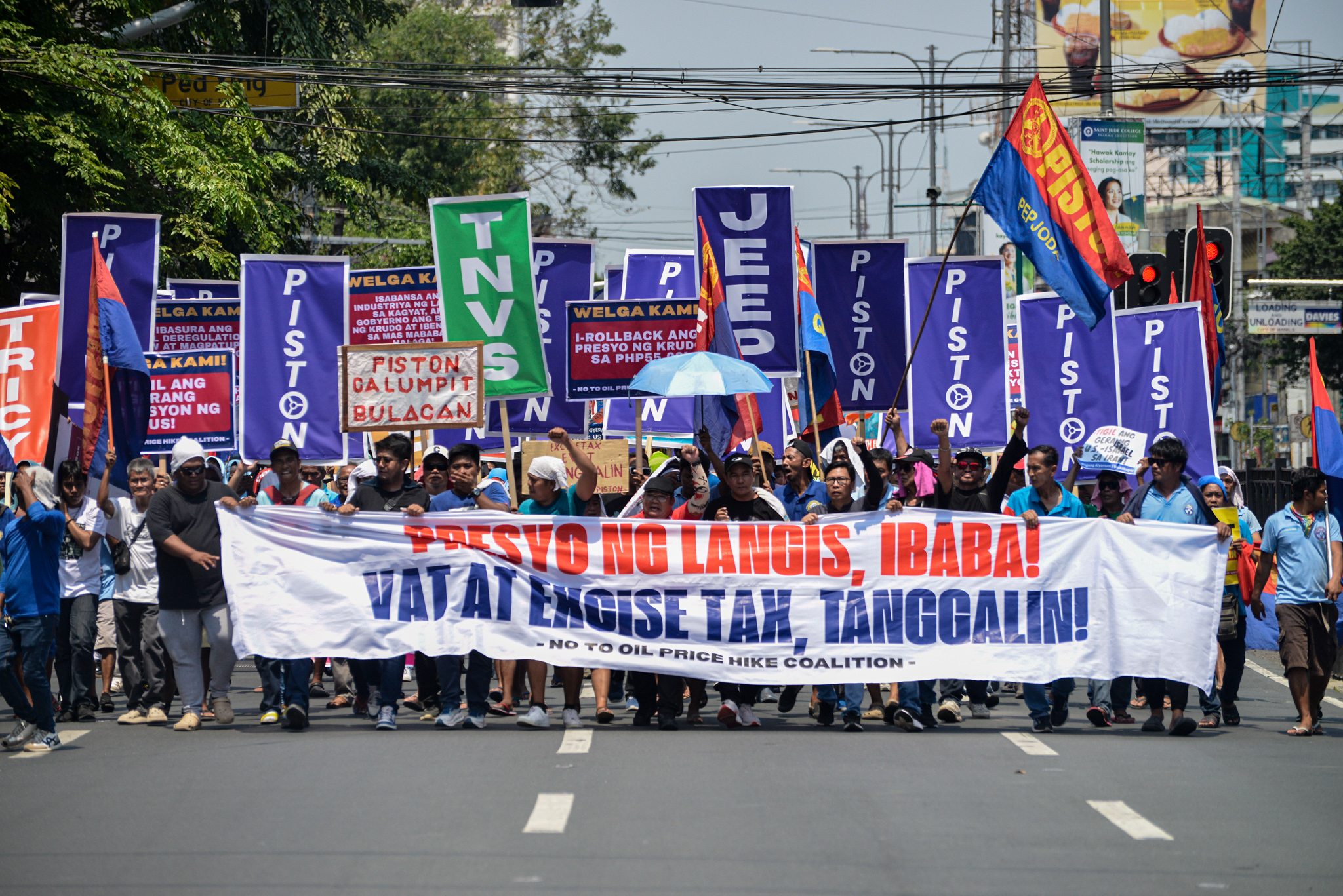
Two days after Marcos Jr. declared a national emergency, transport workers, commuters and progressive organizations launched one of the biggest national transport strikes. Thousands participated in over 85 strike and protest centers, which effectively shut down the majority of the country’s public transport routes from March 26 to 27. Leading the strike was the recently formed No to Oil Price Hike Coalition, a broad national coalition of groups from all modes of public land transport including jeeps, buses, tricycles, platform-based transportation, and motorcycle taxis and delivery riders. The coalition laid out six demands including: the removal of excise and value added tax, a rollback of diesel prices to Php55, increase in fares and minimum wage, junking of the Oil Deregulation Law, nationalization of the oil industry, and an end to the US-Israel war of aggression in Iran.
Prado, also a president of their local jeepney drivers’ association, headed one of the strike centers. In an emotional speech, he expressed his hopes that they win in their struggle against oil price hikes so his child would no longer be forced to find a job just to pursue college. “If you are a father and your child is thirsty, would you give him poison? Then why is Marcos Jr., the father of the country, making life harder for us who are already living in poverty?” Prado said.
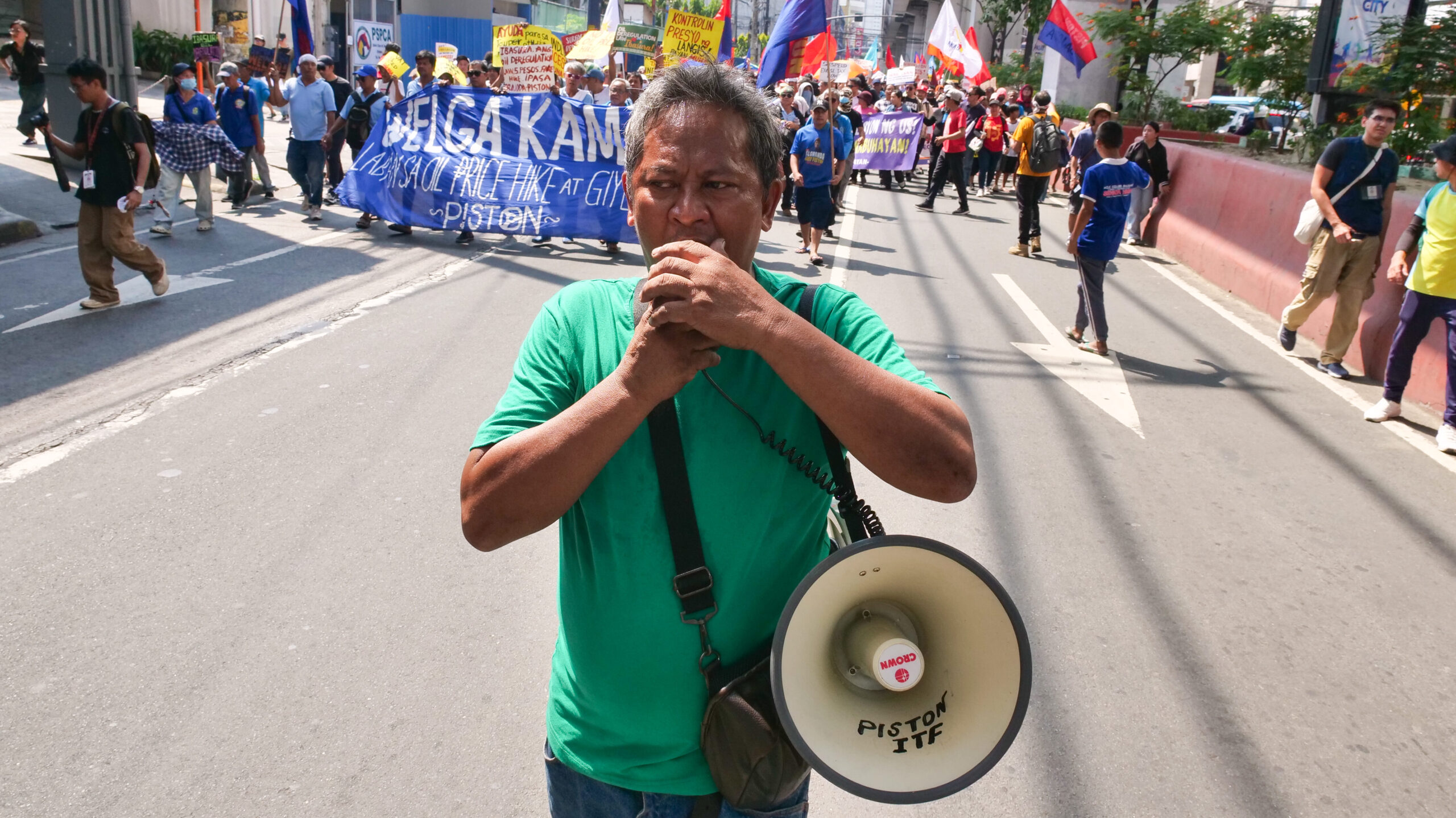
For his part, Desaca notes that commuters, while left stranded, understand the need for transport workers to assert their rights to life and livelihood. They set up their own protest centers in support of the strike. The strike concluded on Friday with a massive march to the Presidential palace. Floranda, who also spearheads the strike and the coalition, warned that they are ready to launch bigger strikes until the Marcos Jr. government heeds the transport sector’s legitimate and unified demands. Marcos Jr. has not yet responded to any of the coalition’s demands.
Without clear and significant government action to ease oil price surges, the Philippine public transport system remains at risk of a total shutdown as the effects of the US-Iran war escalates with no end in sight, putting in jeopardy the lives and livelihood of millions of Filipino transport workers.
